Fibroid Belly vs Pregnancy Belly: How to Tell the Difference
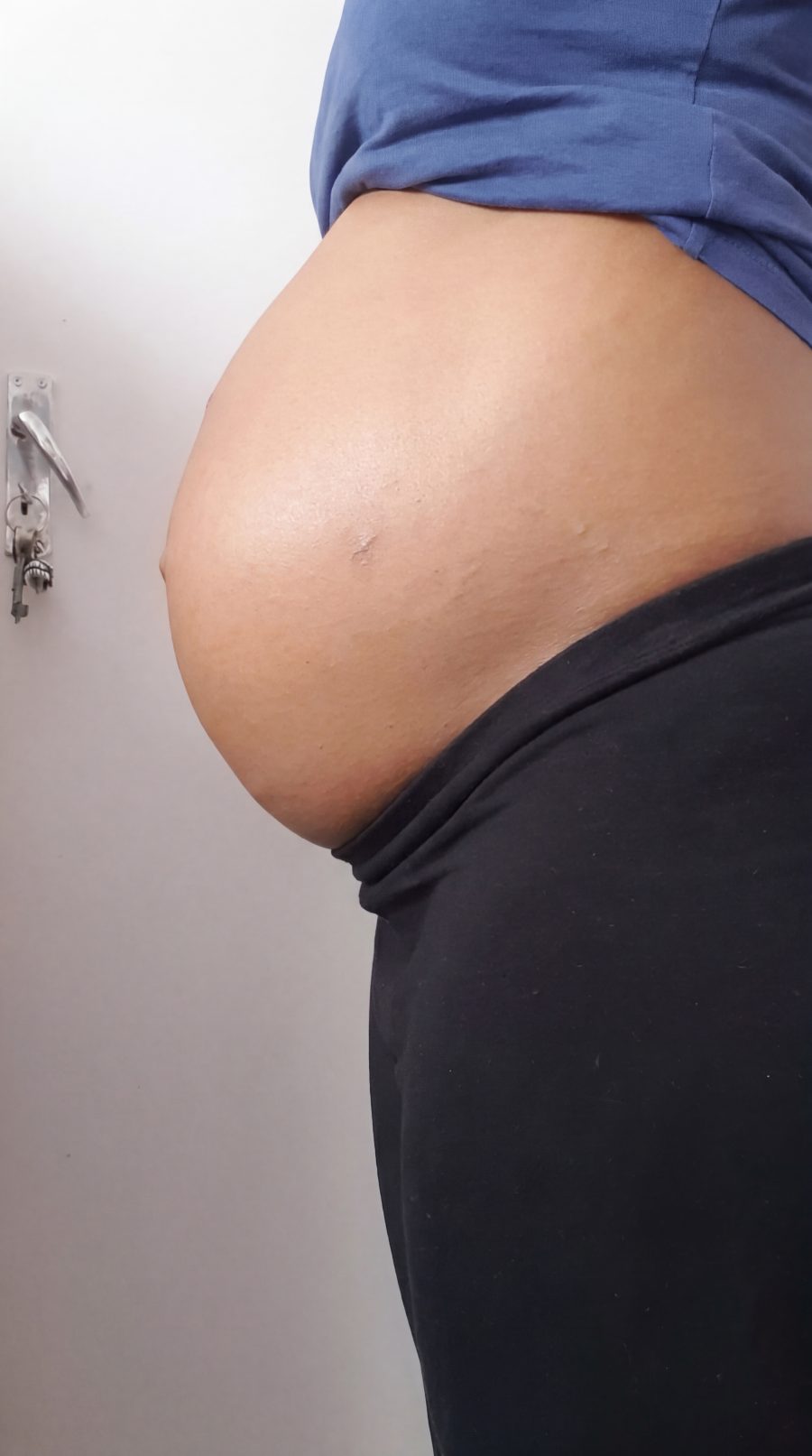
If you've caught yourself smoothing your top down over a lower belly bulge, wondering whether people think you're pregnant when you're not — you're not imagining it, and you're not alone. A large fibroid can genuinely make your abdomen look several months pregnant. I know this one personally: I lived with a 12cm fibroid myself before I founded TrueWonder Herbs. My story is here if you want the full picture.
The key differences at a glance
| Fibroid belly | Pregnancy belly | |
|---|---|---|
| Feel | Firm, dense, sometimes lumpy | Softer, evenly rounded |
| Growth | Months to years, can fluctuate | Predictable, week by week |
| Periods | Heavy, prolonged, or irregular — not missed | Missed |
| Pregnancy test | Negative | Positive |
| Other symptoms | Pelvic pressure, frequent urination, back pain, bloating | Nausea, breast tenderness, fatigue |
| Confirmed by | Ultrasound | Pregnancy test + ultrasound |
How fibroid belly feels different
A fibroid belly usually feels firm or hard to the touch, almost like a stretched drum, rather than the softer give of a pregnancy bump. It's often concentrated lower down, below the navel, and depending on where the fibroid sits, it can feel slightly uneven or lumpy rather than a smooth, symmetrical curve.
Growth pattern: weeks vs months or years
This is often the biggest giveaway. Pregnancy follows a fairly predictable week-by-week pattern. A fibroid belly, on the other hand, typically develops slowly over months or even years, and can seem to fluctuate — bigger and more bloated some weeks, less noticeable in others — rather than steadily progressing.
Symptoms that point to fibroids, not pregnancy
- Heavy or prolonged periods — instead of a missed period, many women with fibroids notice their periods getting heavier, longer, or more painful
- Pelvic pressure or a feeling of fullness, sometimes with lower back pain
- Frequent urination, from the fibroid pressing on the bladder
- Bloating that comes and goes, rather than steadily increasing
- Fatigue, dizziness, or breathlessness — often from low iron caused by the heavy bleeding, something many women never connect back to fibroids
When a bulge might be both — fibroids and pregnancy together
Here's the part that surprises a lot of women: you can have fibroids and be pregnant at the same time. The two aren't mutually exclusive. If you already know you have a fibroid and you're also trying to conceive, don't assume every change in your belly is "just the fibroid" — and don't assume it's pregnancy either. This is exactly why a real test and scan matter more than judging by shape or size.
What to do if you're not sure
Take a home pregnancy test first — it's the fastest way to rule pregnancy in or out. If it's negative and the bulge, bleeding changes, or pelvic pressure continue, see a doctor for an ultrasound. It's the only way to actually confirm a fibroid, how large it is, and where it sits — and it's the right next step either way, not something to guess at home indefinitely.
My own experience with this
I carried a 12cm fibroid for years before I properly understood what was happening in my own body, and it took me 7 years of trying before I conceived. What eventually helped me was shifting from only asking "how do I shrink this" to asking "why did it grow in the first place" — addressing the underlying, root-cause factors alongside the fibroid itself, not instead of seeing a doctor. That's the same root-cause-first approach behind every plan we offer at TrueWonder Herbs today. Read my full story →